Practitioner Notes
What is already known about the topic
-
Continuous professional development (CPD) is recognized as a critical component for enhancing the quality of teaching and learning.
-
Uganda’s National Teacher Policy (NTP) was developed to address issues such as under-professionalization, inadequate quality assurance, and low entry requirements in the teaching profession.
-
Bourdieu’s Field Theory (BFT) provides a framework for understanding the complex social dynamics and power relations involved in policy implementation.
What this study contributes
-
This study applies Bourdieu’s field theory to examine the implementation of the NTP, focusing on the interplay between the policy field and the field of teachers’ work.
-
The research highlights significant intra-field tensions, including the misalignment between top-down policy directives and the practical realities faced by teachers and institution heads.
-
The study identifies the influence of habitus and various forms of capital (cultural, social, economic, symbolic) on the engagement and effectiveness of CPD initiatives.
-
Insights from the study underscore the need for reflexive habitus among policymakers, principals, and teachers to enhance policy implementation.
Implications for practice and policy
-
Policymakers should design CPD policies that are flexible and adaptable to the diverse contexts of schools across Uganda. Localized adaptation should be allowed, enabling schools to tailor CPD initiatives to their specific needs and resources.
-
There is a need for more equitable distribution of funds and materials for CPD across all schools. Under-resourced schools should receive special attention to ensure they can meet policy requirements.
-
incentives for teachers to engage in CPD, such as recognition awards, career advancement opportunities, and financial bonuses, can motivate participation.
-
CPD content should be practical, relevant, and directly applicable to teachers’ everyday classroom challenges. Collaborative professional development activities that encourage peer learning and support are more likely to result in meaningful outcomes.
-
Schools should establish professional learning communities (PLCs) within and across schools to enhance peer collaboration and collective professional growth.
-
Policymakers should regularly consult with teachers, principals, and other stakeholders to gather insights and feedback on policy directives and CPD programs. This participatory approach ensures that policies are grounded in the lived experiences of educators and are more likely to be effective.
-
Teachers should be provided with opportunities and tools for self-reflection, allowing them to critically assess their teaching practices and identify areas for improvement. Reflective practices can help teachers adapt to new methodologies and overcome resistance to change.
1. Introduction and Background
Uganda’s National Teacher Policy (NTP) was developed to address the critical need for improving the quality of education by professionalizing the teaching profession (MoES, 2019) The policy emerged in response to significant challenges identified in studies such as the Teacher Initiative for Sub-Saharan Africa (TISSA) report of 2013. These challenges include under-professionalization of the teaching profession, inadequate quality assurance and standards, a shortage of science teachers, and low academic requirements for entry into the teaching profession (MoES, 2019; Ssempala et al., 2021). The NTP aims to create a robust framework that enhances the status, quality, and professionalism of teachers in Uganda.
The objectives of the NTP are multifaceted and designed to overhaul the teaching profession comprehensively. Firstly, the policy aims to standardize the development, qualifications, and practices of teachers across all educational levels. Secondly, it seeks to streamline teacher management to improve productivity, discipline, retention, and motivation. Thirdly, the policy emphasizes strengthening both pre-service and in-service teacher training to ensure that teachers possess the competencies necessary to deliver high-quality learning outcomes. Lastly, the NTP integrates cross-cutting issues such as ICT, gender, HIV/AIDS, environment, and human rights into all aspects of teacher training, management, and practice.
A critical component of the NTP is the emphasis on continuous professional development (CPD) for teachers. CPD is recognized as essential for maintaining and enhancing the quality of teaching and learning (Kizito, 2023). It involves ongoing training and development activities that help teachers update their skills and knowledge in response to evolving educational standards and practices. The NTP mandates the establishment of the Uganda National Institute of Teacher Education (UNITE) to spearhead CPD initiatives, ensuring that teachers continuously improve their pedagogical skills and remain responsive to the dynamic educational landscape.
The importance of CPD in the NTP cannot be overstated. It is viewed as a strategic tool for professional growth, enabling teachers to adapt to new educational challenges and innovations (Kibirige, 2023; Okumu & Opio, 2023). By engaging in CPD, teachers can enhance their instructional strategies, stay informed about the latest developments in their subject areas, and adopt best practices in classroom management and student engagement. Moreover, CPD contributes to teachers’ personal and professional fulfillment, which, in turn, fosters a motivated and committed teaching workforce capable of driving educational excellence in Uganda.
In a nutshell, the National Teacher Policy of Uganda aims to elevate the teaching profession by setting high standards, improving management practices, and emphasizing continuous professional development (MoES, 2019). Through these measures, the policy seeks to ensure that Uganda’s teachers are well-equipped to provide high-quality education, thereby contributing to the nation’s socio-economic development and achieving the broader educational goals outlined in national and international frameworks.
2. Research Aim and Objectives
The primary aim of this study was to investigate the implementation of Uganda’s National Teacher Policy (NTP) through the lens of Bourdieu’s field theory. The specific objectives of the study were threefold:
- Investigate the Implementation of the NTP through Bourdieu's Field Theory.
- Explore the Interplay between the Policy Field and the Field of Teachers' Work.
- Analyze the Experiences of Institution Heads and Teachers in Kampala.
3. Research Questions
- How do Bourdieu's concepts of field, habitus, and capitals illuminate the processes and outcomes of the National Teacher Policy's implementation in Uganda?
- What are the intra-field tensions and alignments between the policy field and the field of teachers' work in the context of implementing the National Teacher Policy?
- How do institution heads and teachers in Kampala experience and perceive the continuous professional development (CPD) initiatives under the National Teacher Policy, and what challenges and successes do they encounter?
4. Theoretical Framework
4.1. Overview of Bourdieu’s Field Theory
Bourdieu’s Field Theory provides a powerful analytical framework for understanding the complex social dynamics involved in the implementation of policies (Bourdieu, 1990a; Bourdieu & Wacquant, 1992; Naidoo, 2020). Central to this theory are the key concepts of field, habitus, and capitals, each of which plays a critical role in shaping the behaviors and practices of individuals within a given social space.
Field refers to a structured social space with its own rules, norms, and power relations, within which agents and institutions operate and interact (Ancelovici, 2021). Each field, such as education, politics, or economics, is relatively autonomous but intersects with other fields. In this study, the policy field encompasses the sphere of government and institutional actors involved in the creation, dissemination, and enforcement of the National Teacher Policy (NTP), while the field of teachers’ work includes the everyday practices, norms, and professional engagements of teachers within schools.
Habitus is the set of durable dispositions and internalized practices that guide the perceptions, thoughts, and actions of individuals (Bourdieu, 1990a; Akram, 2023). Habitus is shaped by one’s background, education, and social experiences, and it operates largely unconsciously. In the context of this study, the habitus of policymakers, institution heads, and teachers influences how they interpret and enact the NTP, affecting the policy’s implementation at various levels.
Capitals refer to the resources and assets that individuals and groups possess and can mobilize within a field. Bourdieu identifies several forms of capital:
- Cultural Capital, which encompasses educational qualifications, knowledge, skills, and cultural competencies.
- Social Capital, which involves networks of relationships and social connections that provide support and access to resources.
- Economic Capital, which includes financial assets and material resources.
- Symbolic Capital which pertains to prestige, recognition, and authority within a field (Bourdieu, 1990a).
This study applied Bourdieu’s field theory to analyze the implementation of the NTP by examining the interplay between the policy field and the field of teachers’ work. It investigated how the different habitus of policymakers, institution heads, and teachers, as well as their varying access to different forms of capital, influence the enactment of the policy. More specifically, the study explored intra-field tensions and alignments, highlighting the conflicts and synergies that emerge as the NTP is operationalized. Through this theoretical lens, the study aimed to provide a nuanced understanding of the structural and agentic factors that facilitate or hinder the effective implementation of the NTP. It sheds light on the power dynamics, social relations, and material conditions that shape the professional development of teachers in Uganda, ultimately offering insights into how policy implementation can be improved to achieve better educational outcomes:

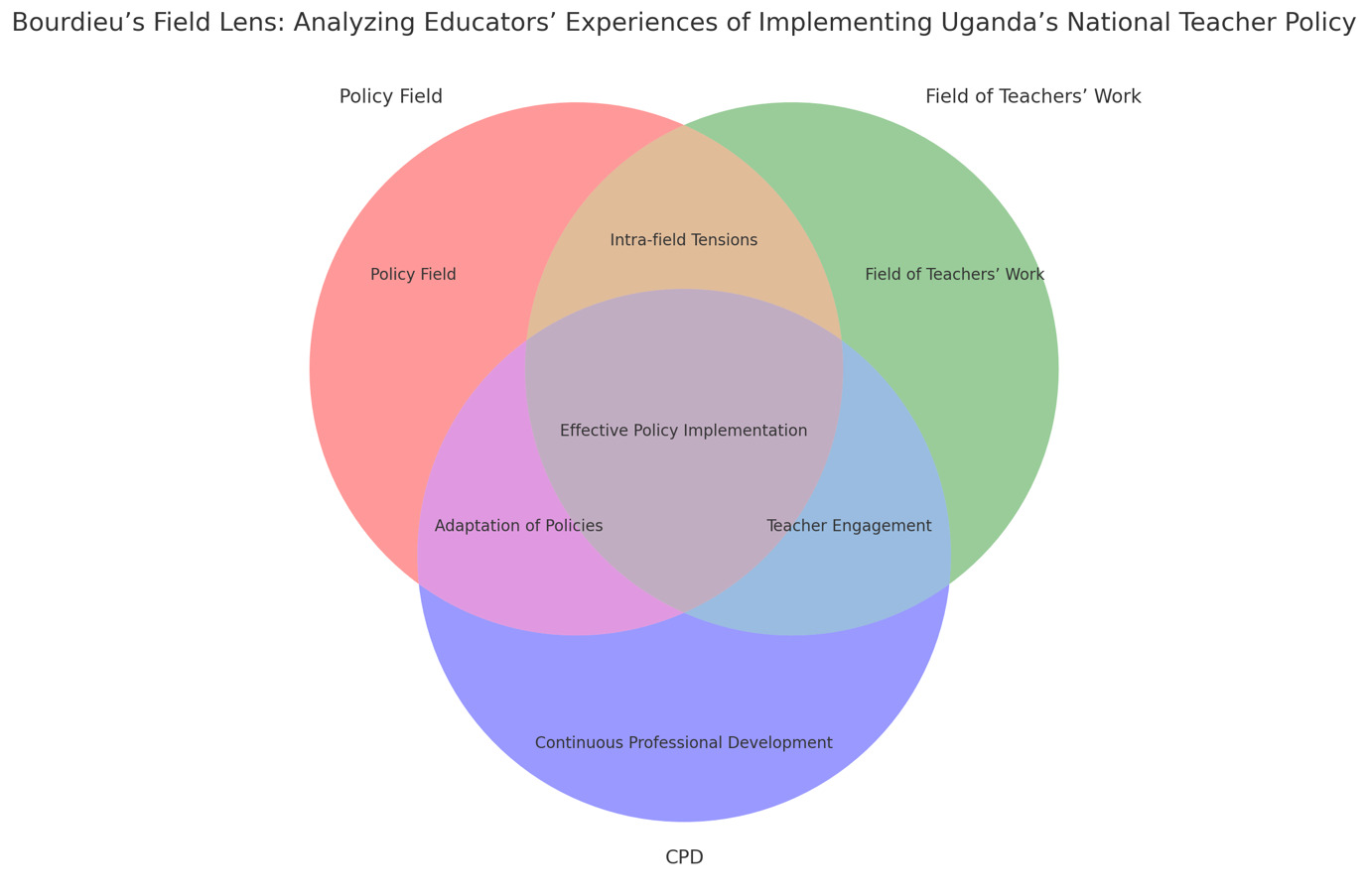
The conceptual Venn diagram above summarizes how Bourdieu’s Field Lens was used to analyze educators’ experiences implementing Uganda’s National Teacher Policy.
4.2. The Policy Field and the Field of Teachers’ Work
Bourdieu’s concept of field provides a framework for analyzing the distinct but interconnected social spaces where agents operate with varying degrees of power, resources, and influence. In the context of Uganda’s National Teacher Policy (NTP), two primary fields are of interest: the policy field and the field of teachers’ work. Each field has its own structure, agents, and stakes, and their interaction shapes the implementation of the NTP.
4.2.1. The Policy Field
The policy field refers to the structured social space where educational policies are formulated, disseminated, and enforced. This field includes various agents such as government officials, policymakers, education ministry personnel, and institutional leaders. The structure of the policy field is hierarchical, with the Ministry of Education and Sports at the top, followed by district education offices, and school administration at the grassroots level. The primary stakes in this field involve the successful formulation and implementation of policies that improve educational outcomes, enhance teacher professionalism, and ensure compliance with national and international educational standards.
Agents within the policy field operate with specific goals and interests, often influenced by their access to different forms of capital. For example, policymakers might possess significant symbolic capital in the form of authority and expertise, which they use to shape and promote the NTP. Institutional leaders and district officials, with their cultural and social capital, play crucial roles in interpreting and executing these policies within their respective jurisdictions.
4.2.2. The Field of Teachers’ Work
The field of teachers’ work encompasses the everyday practices, norms, and professional engagements of teachers within schools. This field includes teachers, students, parents, and school administrators as primary agents. The structure is more horizontal compared to the policy field, characterized by collaborative and sometimes contentious interactions among teachers, their peers, and school leadership.
Everyday practices in this field involve lesson planning, classroom instruction, student assessment, and participation in professional development activities. Norms include professional standards, ethical guidelines, and pedagogical approaches that teachers adhere to. However, teachers in Uganda face several challenges, such as limited resources, large class sizes, inadequate training opportunities, and socio-economic constraints that impact their effectiveness and motivation.
4.2.3. Intra-field Tensions and Interactions
The interaction between the policy field and the field of teachers’ work often results in intra-field tensions. These tensions arise from differing logics of practice and the varying habitus of agents within each field. For instance, while the policy field operates with a top-down approach, emphasizing compliance and standardization, the field of teachers’ work is more concerned with practical, day-to-day challenges and the immediate needs of students.
One significant tension involves the implementation of continuous professional development (CPD). Policymakers advocate for regular CPD to enhance teacher quality, but teachers often find these initiatives disconnected from their immediate realities and classroom needs. This disjunction is further exacerbated by the differing habitus of policymakers and teachers; policymakers may have a more strategic, long-term perspective, while teachers prioritize short-term, practical solutions to classroom challenges.
Additionally, the distribution of capitals influences the interactions between these fields. Teachers with higher cultural capital, such as advanced qualifications or professional recognition, might navigate the policy requirements more effectively than their peers. Conversely, those with limited social or economic capital may struggle to meet policy demands, leading to feelings of disenfranchisement and resistance.
Understanding these intra-field tensions and interactions is crucial for analyzing the implementation of the NTP. By recognizing the complex dynamics between the policy field and the field of teachers’ work, this study aims to uncover the underlying factors that facilitate or hinder effective policy implementation, providing insights for more aligned and supportive educational reforms.
4.3. Habitus and Capitals
Bourdieu’s concepts of habitus and capitals are central to understanding the social dynamics within fields and how individuals navigate and influence these spaces (Bourdieu, 2001). In the context of the National Teacher Policy (NTP) implementation, these concepts provide valuable insights into the behaviors, attitudes, and resources that shape policy enactment and teacher professional development.
4.3.1. Habitus
Habitus refers to the deeply ingrained dispositions, attitudes, and behaviors that individuals acquire through their life experiences and socialization processes (Bourdieu, 2001). These dispositions shape how individuals perceive the world, interpret social interactions, and respond to various situations. Habitus is both structured by one’s past experiences and structuring in that it influences future practices and perceptions. There are several types of habitus relevant to this study:
- Primary Habitus: Formed during early childhood and shaped by family, culture, and initial education, primary habitus deeply influences an individual's fundamental attitudes and behaviors (Bourdieu, 2001).
- Secondary Habitus: Developed through formal education, professional training, and work experiences, secondary habitus relates to the skills, knowledge, and dispositions acquired in specific fields or domains (Bourdieu, 2001).
- Collective Habitus: Shared by members of a social group or profession, collective habitus encompasses the common practices and norms that define the group's identity and interactions (Bourdieu, 2001).
In the context of NTP implementation, the habitus of policymakers, institution heads, and teachers plays a crucial role in how policies are interpreted, enacted, and received. For instance, policymakers’ habitus, shaped by their professional training and bureaucratic environment, may prioritize regulatory compliance and standardization. In contrast, teachers’ habitus, influenced by daily classroom experiences and immediate educational challenges, may focus on practical and adaptive solutions.
4.3.2. Capitals
Bourdieu identifies several forms of capital that individuals and groups possess and mobilize within fields including cultural, social, economic, and symbolic capital (Bourdieu, 2001):
- Cultural Capital: Comprises educational qualifications, knowledge, skills, and cultural competencies. In the educational field, cultural capital can enhance a teacher's ability to engage with and implement new pedagogical practices effectively.
- Social Capital: Refers to networks of relationships and social connections that provide support, information, and access to resources. Strong social capital can facilitate collaboration, mentorship, and professional development opportunities for teachers.
- Economic Capital: Includes financial assets and material resources. Economic capital can influence a school's ability to invest in infrastructure, resources, and CPD programs, directly impacting the quality of education and teacher development.
- Symbolic Capital: Pertains to prestige, recognition, and authority within a field. Symbolic capital can legitimize an individual's or institution's role and influence within the educational sector, affecting how policies are received and enacted.
4.4. Impact of Habitus and Capitals on Policy Implementation and Teacher Learning
The habitus and capitals of individuals within the policy field and the field of teachers’ work significantly impact the implementation of the NTP and the effectiveness of teacher professional development. Policymakers with high levels of cultural and symbolic capital can drive the policy agenda, but their habitus may be disconnected from the practical realities faced by teachers. This disjunction can lead to policies that are theoretically sound but challenging to implement in practice.
Teachers’ habitus, shaped by their day-to-day experiences and professional training, affects their receptivity to policy directives and CPD initiatives. Those with robust cultural capital, such as advanced qualifications and pedagogical expertise, are better positioned to navigate and benefit from CPD opportunities. Conversely, teachers with limited economic and social capital may struggle to access and engage with CPD programs, limiting their professional growth and the overall impact of the NTP.
Furthermore, the interaction between different forms of capital can create power dynamics that influence policy implementation. For example, institution heads with substantial social and symbolic capital can foster supportive environments for CPD by leveraging their networks and authority. However, if these leaders’ habitus is not aligned with the teachers’ habitus, efforts to implement CPD initiatives may face resistance or lack effectiveness.
In conclusion, understanding the interplay of habitus and capitals within the policy field and the field of teachers’ work provides a nuanced perspective on the challenges and opportunities in implementing the NTP. If policymakers and educators recognize these dynamics, they can develop more contextually sensitive and effective strategies for teacher professional development, ultimately enhancing educational outcomes in Uganda.
5. Research Methodology
5.1. Research Design
This study employed a case study design (Baxter & Jack, 2008; Yin, 2009). Case study design is used to explore and understand complex issues within their real-life contexts. According to Yin (2009), case study research is particularly useful when the boundaries between the phenomenon and context are not clearly evident. This approach is valuable for examining contemporary events and provides a comprehensive understanding of the dynamics present within single settings.
This study investigated the implementation of Uganda’s National Teacher Policy (NTP) through Bourdieu’s field theory, focusing on continuous professional development (CPD) of teachers. Given the multifaceted nature of educational policies and the varying contexts within which they are implemented, a case study design was particularly well-suited to this research. The implementation of the NTP involves intricate interactions between multiple stakeholders, including policymakers, institution heads, and teachers. These interactions are influenced by the unique socio-economic, cultural, and institutional contexts of different schools. A case study design allowed for an in-depth exploration of these complexities and contextual factors, providing a rich, detailed understanding of how the policy is enacted and experienced at various levels. This study also aimed at investigating “how” the NTP is implemented and “why” certain outcomes are observed. These types of questions are best addressed through a case study approach, which enables the researcher to delve deeply into the processes and mechanisms underlying the policy implementation. By examining the interplay between the policy field and the field of teachers’ work, the study uncovered the reasons behind specific implementation challenges and successes. The other objective of the study was to analyze the experiences of institution heads and teachers regarding CPD initiatives under the NTP. The case study design supported the collection of data from multiple sources, including interviews, focus group discussions, and observations. This multi-perspective approach ensured a comprehensive understanding of the phenomenon, capturing the diverse viewpoints and experiences of different stakeholders.
5.2. Qualitative Research Approach
A qualitative research approach was chosen for this study due to its emphasis on capturing rich, detailed data that reflect the lived experiences and social realities of participants. Qualitative methods are particularly effective in exploring the nuances of human behavior, attitudes, and social interactions, which are central to understanding how the NTP is enacted and experienced within the educational field. This approach facilitates a comprehensive exploration of the contextual factors, power dynamics, and subjective interpretations that influence policy implementation and teacher professional development.
To achieve a detailed and context-specific understanding of the NTP implementation, this study employs a case study design. A case study allowed for an intensive examination of a particular context, offering insights into the complexities and specificities of the policy implementation process. This study focused on a purposive sample of five education policy makers, ten headteachers, and twenty teachers from selected primary and secondary schools in Kampala. The selection of these schools was based on their representativeness of different educational environments within the urban context of Kampala, including variations in school size, resources, and socio-economic backgrounds of students and staff. By examining multiple schools, the study aimed to capture a diverse range of experiences and perspectives, thereby providing a holistic view of the NTP’s implementation.
The case study design also facilitated an in-depth analysis of the interactions between the policy field and the field of teachers’ work, as well as the intra-field tensions that arise. It allowed for a detailed exploration of how institution heads and teachers engage with CPD initiatives, the challenges they face, and the impact of their habitus and capitals on policy enactment and professional development. Through this approach, the study sought to uncover the underlying mechanisms and contextual factors that influence the effectiveness of the NTP, providing valuable insights for policymakers and educators aiming to enhance teacher professional development in Uganda.
5.3. Participants and Sampling
The participants for this study were carefully selected to provide a comprehensive understanding of the implementation of Uganda’s National Teacher Policy (NTP) from multiple perspectives within the educational field. The study focused on education policymakers (n=5), headteachers (n=10) and teachers (n=20) from selected primary schools (n=5) and secondary schools (=5) in Kampala. The education policymakers (Commissioners and Assistant Commissioners), headteachers and teachers were chosen as the primary participants because they play crucial roles in the enactment and experience of the NTP. While the commissioners and assistance commissioners provide policy guidance, headteachers are responsible for interpreting and implementing policy directives at the school level, creating opportunities for continuous professional development (CPD), and addressing challenges that arise during the process. Teachers, on the other hand, are the direct recipients of CPD initiatives and are pivotal in translating policy into classroom practice.
5.4. Data Collection Methods
To comprehensively explore the implementation of Uganda’s National Teacher Policy (NTP) through Bourdieu’s field theory, multiple qualitative data collection methods were employed. This approach ensured a rich, in-depth understanding of the experiences and perspectives of institution heads and teachers. The primary data collection methods included semi-structured interviews, focus group discussions, and observations of CPD activities.
Semi-structured interviews were conducted with institution heads and teachers. This method was chosen for its flexibility, allowing the researcher to probe deeper into specific areas of interest while maintaining a consistent structure across interviews. Semi-structured interviews enable participants to express their views and experiences in their own words, providing nuanced insights into the implementation of the NTP. Interviews with principals and headteachers focused on their roles in policy implementation, challenges faced, strategies employed to facilitate CPD, and their perceptions of the policy’s impact on teaching and learning. Interviews with teachers aimed to capture their experiences with CPD initiatives, the relevance and applicability of these programs, and the challenges they encounter in their professional development.
Focus group discussions (FGDs) were conducted with groups of teachers within each selected school. FGDs were used to explore collective experiences and perceptions, fostering an environment where participants could discuss and reflect on their shared and differing views. This method was particularly useful for identifying common themes and divergences in the implementation of the NTP. Each focus group included 6-8 teachers, representing a mix of subjects and grade levels. Discussions centered on their experiences with CPD, the practical challenges of implementing policy directives, and their suggestions for improving the NTP. Observations of CPD activities were conducted to gather real-time data on how these initiatives are implemented and experienced by teachers. This method provided a direct, unfiltered view of the interactions, practices, and challenges involved in CPD sessions. Observations focused on the structure and content of CPD programs, the engagement and participation of teachers, and the facilitation methods used by trainers. Detailed field notes were taken to capture the context, dynamics, and any notable events or interactions.
The combination of semi-structured interviews, focus group discussions, and observations provided a robust data set, enabling triangulation of findings. Semi-structured interviews allowed for deep, individualized insights, while focus group discussions facilitated the exploration of collective experiences and social dynamics. Observations offered an additional layer of context, capturing the practical realities of CPD implementation that might not be fully articulated in interviews or discussions.
5.5. Data Analysis
The data analysis for this study involved a systematic approach to examining the qualitative data collected from semi-structured interviews, focus group discussions, and observations. Thematic analysis, guided by Bourdieu’s concepts, was employed to identify and interpret patterns within the data. This approach provided a structured method for uncovering the underlying mechanisms and dynamics influencing the implementation of Uganda’s National Teacher Policy (NTP).
Thematic analysis was chosen as the primary data analysis technique due to its flexibility and suitability for qualitative research. This method involves identifying, analyzing, and reporting patterns (themes) within the data. For this study, Bourdieu’s concepts of field, habitus, and capitals were used as analytical lenses to guide the thematic analysis. This theoretical framework helped in understanding the social structures and power relations at play in the implementation of the NTP.
The analysis process began with coding, which involved systematically organizing the data into meaningful segments. Initial codes were generated based on the research objectives and Bourdieu’s theoretical concepts. These codes were then refined and categorized into broader themes that captured the key aspects of the data. The initial stage of coding involved an open coding process, where data segments were labeled to capture their essential meaning. This was done inductively, allowing themes to emerge from the data without preconceived categories. In the next stage, axial coding was used to identify relationships between codes and organize them into categories. This process helped in linking codes to specific aspects of the implementation process, such as policy interpretation, CPD experiences, and intra-field tensions. Finally, selective coding was used to integrate and refine the categories into core themes that represented the main findings of the study. These themes were aligned with Bourdieu’s concepts, providing a coherent framework for understanding the data.
Once the data were coded and categorized, the analysis focused on identifying patterns and disjunctions within and between the themes. This involved examining the data for recurring motifs, contradictions, and unique insights that illustrated the complexities of the NTP implementation. Patterns were identified by looking for consistent themes across different data sources (interviews, focus groups, observations) and participant groups (institution heads, teachers). These patterns highlighted common experiences, challenges, and responses to the NTP. Disjunctions, or points of divergence, were also critically analyzed. These included discrepancies between policy intentions and practical implementation, conflicts between the habitus of different agents, and variations in access to and use of capitals. Analyzing these disjunctions provided insights into the tensions and misalignments that affect the efficacy of the NTP.
The chosen data analysis techniques were well-suited to the study’s objectives and theoretical framework. Thematic analysis allowed for a deep exploration of the qualitative data, while coding and categorizing facilitated a systematic approach to organizing and interpreting the data. Using Bourdieu’s concepts as analytical lenses ensured that the analysis remained grounded in the theoretical framework, providing a nuanced understanding of the social dynamics influencing the NTP implementation.
6. Findings and Discussion
6.1. Processes and Outcomes of the NTP’s Implementation
This section presents and discusses the findings related to the first research question: How do Bourdieu’s concepts of field, habitus, and capitals illuminate the processes and outcomes of the National Teacher Policy’s implementation in Uganda? The analysis is organized according to key themes identified in the data, supported by relevant excerpts, quotes, and statistics. The findings are cross-referenced with existing literature to provide a comprehensive understanding of the NTP’s implementation.
6.1.1. Theme 1: Field Dynamics and Policy Implementation
The policy field, dominated by the Ministry of Education and Sports, is characterized by hierarchical power relations. Institution heads reported feeling constrained by top-down directives that often do not consider the contextual realities of individual schools. As one headteacher noted: "The policies come from above, and we have to implement them as they are, even if they don’t fit well with our school’s needs." This finding aligns with Bourdieu’s (1990a) assertion that fields are structured spaces with their own rules and power dynamics. The hierarchical nature of the policy field often leads to a disconnection between policymakers and practitioners, impacting the efficacy of policy implementation.
Tensions within the policy field were evident, particularly between policymakers and institution heads. The rigid policy frameworks imposed by the NTP often clash with the practical needs of schools. For instance, the requirement for frequent CPD sessions was seen as unrealistic given the limited resources available to many schools. One principal highlighted this issue: “We are required to hold regular CPD sessions, but we don’t have the funding or time to do this effectively. It’s a significant burden on our already stretched resources.” This intra-field tension reflects the misalignment between the logic of the policy field and the practical realities within the field of teachers’ work, a phenomenon Bourdieu (1990a) describes as disjuncture between different social fields.
6.1.2. Theme 2: Habitus and Policy Interpretation
The habitus of institution heads, shaped by their professional experiences and socialization within the educational field, influences how they interpret and implement the NTP. Many institution heads emphasized the importance of adapting policy directives to fit their school’s context. As one headteacher expressed: “We have to interpret the policies in a way that makes sense for our teachers and students. It’s about finding a balance between compliance and practicality.” This adaptive approach to policy implementation highlights the role of habitus in mediating the relationship between policy and practice. It supports Bourdieu’s (1990b) view that habitus enables individuals to navigate and negotiate the constraints of their social fields.
Teachers’ habitus, formed through their educational background and teaching experiences, affects their engagement with CPD initiatives. Teachers with a strong professional identity and commitment to lifelong learning were more proactive in participating in CPD. One teacher remarked: “I see CPD as an opportunity to improve my teaching skills and stay updated with new methodologies. It’s essential for my professional growth.” However, some teachers exhibited resistance, viewing CPD as an additional burden rather than a beneficial activity. This divergence in habitus among teachers influences the overall success of CPD initiatives under the NTP, illustrating Bourdieu’s (1990b) concept of habitus as a determinant of individual practices within a field.
6.1.3. Theme 3: Capitals and Access to Resources
Teachers with higher levels of cultural capital, such as advanced degrees and specialized training, were better positioned to benefit from CPD opportunities. These teachers were more likely to engage in and apply new knowledge effectively. A teacher with a master’s degree noted: “Having a strong educational background helps me understand and integrate new teaching methods more effectively.” This finding supports Bourdieu’s (2001) notion that cultural capital facilitates access to and utilization of resources within a field. The disparity in cultural capital among teachers highlights the need for differentiated CPD approaches that consider varying levels of expertise and experience.
Economic capital significantly impacts the implementation of CPD initiatives. Schools with better funding could provide more comprehensive and frequent CPD sessions. Conversely, underfunded schools struggled to meet the policy requirements. A headteacher from a well-resourced school explained: “We have the financial resources to organize regular CPD workshops and bring in external trainers, which has been very beneficial for our teachers.” This disparity underscores Bourdieu’s (2001) argument that economic capital is crucial for accessing and sustaining opportunities within a field. It also highlights the need for equitable resource allocation to ensure that all schools can effectively implement the NTP.
The findings from this study reveal that Bourdieu’s concepts of field, habitus, and capitals provide a robust framework for understanding the complexities of the NTP’s implementation. The hierarchical structure and power dynamics within the policy field create challenges for institution heads, while the habitus of both institution heads and teachers influences their interpretation and engagement with policy directives. Additionally, disparities in cultural and economic capital among schools and teachers affect the accessibility and effectiveness of CPD initiatives.
These insights are consistent with existing literature on educational policy implementation, which emphasizes the importance of considering contextual factors and stakeholder perspectives (Athanasopoulou & Selsky, 2015). The study’s findings suggest that for the NTP to be more effective, policymakers need to adopt a more flexible and context-sensitive approach, taking into account the diverse needs and capabilities of schools and teachers.
In a nutshell, Bourdieu’s theoretical concepts illuminate the processes and outcomes of the NTP’s implementation, highlighting the interplay of structural constraints, individual dispositions, and resource disparities. Addressing these factors is crucial for enhancing the policy’s impact on teacher professional development and ultimately improving educational outcomes in Uganda.
6.2. Intra-Field Tensions and Alignments in Implementing the NTP
This section addresses the second research question: What are the intra-field tensions and alignments between the policy field and the field of teachers’ work in the context of implementing the National Teacher Policy (NTP)? The findings are organized according to key themes identified in the data analysis and are supported by relevant excerpts, quotes, and statistics. These findings are also cross-referenced with existing literature to provide a comprehensive understanding of the intra-field dynamics.
6.2.1. Theme 1: Divergent Priorities and Objectives
A significant tension identified was the divergence between the priorities of the policy field and the practical realities faced by teachers. The policy field, driven by the Ministry of Education and Sports, prioritizes standardized professional development and adherence to regulatory frameworks. In contrast, teachers emphasized the need for practical, context-specific training that addresses their immediate classroom challenges. As one teacher remarked: "The CPD programs mandated by the policy often feel disconnected from what we actually need in the classroom. We need training that is practical and directly applicable to our daily work." This finding aligns with Ball’s (2024) argument that policy often fails to account for the complex and varied realities of practice, leading to a gap between policy intentions and practical implementation. The top-down approach of policy implementation was another source of tension. Institution heads and teachers expressed frustration with the lack of consultation and involvement in the policy-making process. A headteacher explained: “Policies are made without sufficient input from those of us on the ground. We are the ones who have to implement these policies, yet our voices are rarely heard.” This top-down approach contrasts with the bottom-up needs of teachers who seek greater autonomy and input into professional development initiatives. Fullan (2017) emphasizes the importance of involving practitioners in the policy-making process to ensure that policies are responsive to their needs and contexts.
6.2.2. Theme 2: Resource Disparities
Resource disparities between schools were highlighted as a critical tension impacting the implementation of the NTP. Schools with better funding and infrastructure were more capable of providing effective school-based CPD, while under-resourced schools struggled to meet policy requirements. One principal from a poorly funded school stated: “We are expected to implement the same CPD programs as well-funded schools, but we lack the basic resources to do so. It’s an unfair expectation.” This resource disparity exacerbates inequalities and hampers the equitable implementation of the NTP. Bourdieu’s (2001) concept of economic capital is particularly relevant here, as schools with more economic capital can better support CPD initiatives, highlighting the need for more equitable resource allocation.
6.2.3. Theme 3: Alignment and Synergy in Professional Development
Despite the tensions, there were instances of alignment and synergy where the policy field and the field of teachers’ work effectively converged. Successful CPD initiatives often involved collaboration between policymakers, institution heads, and teachers, ensuring that the training was both policy-compliant and practically relevant. A headteacher from a well-resourced school noted: “We worked closely with the Ministry to tailor the CPD programs to our teachers’ needs. This collaboration made the training more effective and relevant.” These successful cases illustrate the potential for alignment when there is active collaboration and mutual understanding between the policy field and the field of teachers’ work. This supports Bourdieu’s (2001) notion that fields can be aligned through negotiation and adaptation.
A common alignment observed was the shared commitment to improving educational outcomes. Both policymakers and teachers recognized the importance of professional development in enhancing teaching quality. A teacher commented: “Even though there are challenges, we all want to see our students succeed. Professional development is key to achieving this goal.” This shared commitment provides a foundation for bridging the gap between policy directives and practical implementation, emphasizing the need for policies that are flexible and adaptable to different contexts.
The findings reveal significant intra-field tensions between the policy field and the field of teachers’ work, primarily driven by divergent priorities, resource disparities, and top-down policy implementation. These tensions underscore the challenges of implementing a standardized policy across diverse educational contexts. However, instances of alignment and synergy highlight the potential for successful policy implementation when there is active collaboration and mutual understanding.
The study’s findings are consistent with existing literature on educational policy implementation, which emphasizes the importance of context-sensitive approaches and stakeholder involvement (Ball, 2024). Addressing the identified tensions requires a more participatory approach to policy-making, equitable resource distribution, and ongoing dialogue between policymakers and practitioners.
To this end, understanding and addressing the intra-field tensions and fostering alignments between the policy field and the field of teachers’ work are crucial for the effective implementation of the NTP. By aligning policy directives with the practical realities and needs of teachers, the NTP can more effectively support professional development and improve educational outcomes in Uganda.
6.3. Experiences and Perceptions of CPD Initiatives under the NTP
This section addresses the third research question: How do institution heads and teachers in Kampala experience and perceive the continuous professional development (CPD) initiatives under the National Teacher Policy, and what challenges and successes do they encounter? The findings are organized according to key themes identified in the data analysis and are supported by relevant excerpts, quotes, and statistics. These findings are cross-referenced with existing literature to provide a comprehensive understanding of the experiences and perceptions of CPD initiatives.
6.3.1. Theme 1: Perceptions of CPD Relevance and Effectiveness
Teachers and institution heads expressed varied perceptions regarding the relevance of CPD content. While some CPD programs were viewed as highly beneficial, others were criticized for being too generic and not tailored to the specific needs of teachers and schools. A secondary school teacher remarked: “The CPD sessions on new teaching methodologies were very helpful. They provided practical strategies that I could directly apply in my classroom.”
Conversely, a primary school teacher noted: “Some of the training sessions felt like they were designed without considering our actual classroom challenges. We need more practical and context-specific training.” Thee above findings align with Desimone’s (2009) assertion that effective professional development must be content-focused, context-specific, and aligned with teachers’ needs to be impactful.
The mode of CPD delivery also influenced perceptions of its effectiveness. Interactive and collaborative sessions were generally perceived more positively compared to lecture-based approaches. An institution head explained: “Workshops that encouraged group discussions and practical activities were far more engaging and effective. Teachers were able to share experiences and learn from each other.” This supports the idea that collaborative professional development activities are more likely to result in meaningful learning and application (Darling-Hammond et al., 2017).
6.3.2. Theme 2: Challenges in CPD Implementation
Resource constraints emerged as a significant challenge in the implementation of CPD initiatives. Limited financial resources, inadequate training materials, and lack of infrastructure hindered the ability of schools to effectively conduct CPD programs. A headteacher highlighted this issue: “We struggle with limited funds and resources. Organizing CPD sessions requires materials and sometimes external trainers, which we simply cannot afford.” This finding is consistent with previous research indicating that resource limitations are a common barrier to effective professional development in low-income contexts (Westbrook et al., 2013).
Teachers frequently cited time constraints as a major challenge to participating in CPD. Balancing teaching responsibilities with professional development activities proved difficult, particularly given the high workload and large class sizes. A teacher stated: “Finding time for CPD is challenging. Our teaching schedules are already packed, and adding CPD sessions makes it even harder to manage.” This reflects the broader issue of time as a critical factor in the feasibility and effectiveness of professional development (Daniel, 2021).
Resistance to change among some teachers was another challenge identified. Teachers who had been in the profession for many years were sometimes reluctant to adopt new practices introduced through CPD. An institution head observed: “Some of our experienced teachers are set in their ways and are resistant to new methods. They see CPD as an additional burden rather than an opportunity.” This resistance can be understood through Bourdieu’s concept of habitus, where established dispositions and practices may conflict with new approaches (Bourdieu, 2018).
6.3.3. Theme 3: Successes in CPD Implementation
Despite the challenges, there were notable successes in CPD implementation. Teachers who actively engaged in CPD reported improvements in their teaching practices and student engagement. A primary school teacher shared: "After the CPD on interactive teaching techniques, I noticed a significant increase in student participation and interest in lessons."
Such positive outcomes underscore the potential of well-designed CPD to enhance teaching effectiveness and student learning, as supported by Guskey’s (2000) model of teacher change.
CPD initiatives that fostered collaboration and peer learning were particularly successful in building a sense of professional community among teachers. A headteacher noted: “CPD sessions that involved collaborative projects and peer mentoring helped create a supportive environment. Teachers are more willing to share ideas and support each other.” This aligns with the literature on professional learning communities, which emphasizes the importance of collaboration and collective responsibility for professional growth (Stoll et al., 2006).
The findings reveal that while there are significant challenges to the implementation of CPD under the NTP, there are also considerable successes. The relevance and delivery of CPD content, resource and time constraints, and resistance to change are critical factors influencing the effectiveness of CPD initiatives. However, instances of improved teaching practices and enhanced professional collaboration highlight the potential benefits of effective CPD.
The above findings suggest that for CPD under the NTP to be more effective, it needs to be more context-specific, adequately resourced, and supported by policies that recognize the practical constraints faced by teachers. Additionally, fostering a culture of continuous improvement and collaboration can help mitigate resistance and enhance the overall impact of CPD initiatives.
7. Conclusion
This study explored the implementation of Uganda’s National Teacher Policy (NTP) through the lens of Bourdieu’s field theory, focusing on the continuous professional development (CPD) of teachers. The key findings of this study provide a comprehensive understanding of the complexities and dynamics involved in the enactment of the NTP, highlighting the critical role of field dynamics, habitus, and various forms of capital. The study revealed significant structural hierarchies and power relations within the policy field, dominated by the Ministry of Education and Sports. These hierarchies often led to a disconnection between policymakers and practitioners, impacting the efficacy of policy implementation. Intra-field tensions were evident, particularly concerning the rigid policy frameworks that often clashed with the practical needs and realities of schools. The habitus of institution heads and teachers, shaped by their professional experiences and socialization, significantly influenced how they interpreted and implemented the NTP. Institution heads emphasized the need to adapt policy directives to fit their school contexts, balancing compliance with practicality. Teachers’ engagement with CPD was also influenced by their habitus, with those possessing a strong professional identity and commitment to lifelong learning more proactive in participating in CPD initiatives.
Disparities in cultural and economic capital among schools and teachers were found to affect the accessibility and effectiveness of CPD initiatives. Teachers with higher levels of cultural capital, such as advanced degrees and specialized training, were better positioned to benefit from CPD opportunities. Economic capital significantly impacted the implementation of CPD, with well-resourced schools able to provide more comprehensive and frequent CPD sessions compared to underfunded schools. The interplay between the policy field and the field of teachers’ work revealed critical insights into the challenges and opportunities in implementing the NTP. The top-down approach of policy implementation often failed to account for the contextual realities of teachers, leading to tensions and misalignments. However, instances of alignment and synergy highlighted the potential for successful policy implementation when there is active collaboration and mutual understanding between policymakers, institution heads, and teachers.
The study underscored the importance of habitus and various forms of capital in shaping the experiences and outcomes of CPD initiatives. Policymakers’ habitus, focused on regulatory compliance, often diverged from the practical habitus of teachers, who prioritized immediate classroom challenges. The varying levels of cultural and economic capital among teachers and schools further influenced their ability to engage with and benefit from CPD initiatives, highlighting the need for differentiated and equitable approaches to professional development. This study provides a nuanced understanding of the factors that facilitate or hinder the effective implementation of the NTP. By recognizing the complex interplay of structural constraints, individual dispositions, and resource disparities, policymakers and educators can develop more contextually sensitive and effective strategies for teacher professional development. Addressing these factors is crucial for enhancing the policy’s impact on teacher professional development and ultimately improving educational outcomes in Uganda.
8. Recommendations and Implications for Policy and Practice
The findings of this study underscore the critical need for reflexivity among policymakers, principals, and teachers to bridge the gaps and tensions identified in the implementation of Uganda’s National Teacher Policy (NTP). Reflexive habitus, which involves self-awareness and the ability to critically reflect on one’s practices and assumptions, is essential for fostering effective policy implementation and professional development.
Policymakers need to develop a reflexive habitus that enables them to understand and consider the practical realities and constraints faced by teachers and school leaders. Policymakers should regularly consult with teachers, principals, and other stakeholders to gather insights and feedback on the practical implications of policy directives. This participatory approach ensures that policies are grounded in the lived experiences of educators and are more likely to be effective. Policymakers must recognize the diversity of educational contexts within Uganda and tailor policies to accommodate these differences. Flexibility and adaptability in policy frameworks can help address the unique needs of various schools and communities.
Principals play a pivotal role in interpreting and implementing policies at the school level. Principals should critically evaluate how policy requirements can be adapted to fit their school’s specific context. This balance between compliance with policy directives and practical application is crucial for effective implementation. Principals should create a supportive environment that encourages teachers to engage in professional development and share best practices. By promoting collaboration and peer learning, principals can enhance the collective capacity of their schools to meet policy goals.
Teachers’ engagement with CPD initiatives is significantly influenced by their habitus. Teachers should be encouraged to view CPD as an ongoing process that enhances their professional growth and improves student outcomes. Reflexive teachers are more likely to actively participate in CPD and apply new knowledge in their practice. Teachers should be provided with opportunities and tools for self-reflection, allowing them to critically assess their teaching practices and identify areas for improvement. Reflective practices can help teachers adapt to new methodologies and overcome resistance to change.
To promote learning within and across the fields of policy and practice, different strategies can be employed. There is need to establish platforms and forums that facilitate regular interaction and dialogue between policymakers, principals, and teachers. Collaborative initiatives such as joint workshops, policy roundtables, and professional learning communities can bridge the gap between policy formulation and practical implementation. Design CPD programs that incorporate input from all stakeholders and address both policy objectives and practical needs. Integrated professional development ensures that CPD initiatives are relevant, context-specific, and effectively support teachers’ professional growth. Implement feedback loops that allow for ongoing assessment and refinement of policies and CPD initiatives. Regular feedback from educators on the ground can help policymakers adjust strategies and improve the alignment between policy and practice.
Based on the findings of this study, the following recommendations are made to enhance the implementation of continuous professional development (CPD) under Uganda’s National Teacher Policy (NTP). These recommendations focus on policy adjustments, institutional practices, and the role of collaboration and support networks. Policymakers should design CPD policies that are flexible and adaptable to the diverse contexts of schools across Uganda. Policies should allow for localized adaptation, enabling schools to tailor CPD initiatives to their specific needs and resources. To address resource disparities, the Ministry of Education and Sports should ensure equitable distribution of funds and materials for CPD across all schools. Special attention should be given to under-resourced schools to provide them with the necessary support to meet policy requirements:
- There is need to introduce incentives for teachers to engage in CPD, such as recognition awards, career advancement opportunities, and financial bonuses. These incentives can motivate teachers to actively participate in professional development activities.
- School leaders should integrate CPD into the core culture of their institutions. This involves making CPD a regular and expected part of teachers' professional lives, rather than an additional burden. Regular, scheduled CPD sessions that align with the school's strategic goals can foster a culture of continuous improvement.
- CPD content should be practical, relevant, and directly applicable to teachers' everyday classroom challenges. Involve teachers in the planning and design of CPD programs to ensure that the training meets their needs and addresses their specific concerns.
- Establish a supportive environment that encourages experimentation and innovation in teaching practices. School leaders should provide opportunities for teachers to share their experiences, successes, and challenges, fostering a collaborative and open learning culture.
- Develop professional learning communities (PLCs) within and across schools where teachers can collaborate, there is need to share best practices, and support each other's professional growth. PLCs can enhance peer learning and create a sense of collective responsibility for professional development.
- Schools should collaborate with external experts, such as university educators, educational consultants, and experienced trainers, to bring in fresh perspectives and advanced knowledge. These collaborations can enhance the quality and impact of CPD initiatives.
- Establish strong networks of support that include mentorship programs, peer coaching, and collaborative projects. These networks can provide ongoing support, guidance, and encouragement, helping teachers to implement new skills and sustain professional growth.
- In conclusion, enhancing the implementation of CPD under the NTP requires a multifaceted approach that includes policy adjustments, supportive institutional practices, and robust collaboration and support networks.
9. Future Research Directions
Building on the findings and insights gained from this study, several avenues for future research can be identified to further explore and enhance the implementation of Uganda’s National Teacher Policy (NTP) and continuous professional development (CPD) initiatives:
Future research could adopt a longitudinal approach to investigate the long-term impact of CPD initiatives on teaching practices and student outcomes. This would provide valuable insights into the sustained effects of professional development and identify factors that contribute to lasting improvements in educational quality. Comparative studies examining the implementation of the NTP across different regions of Uganda would be beneficial. Such research could highlight regional disparities and contextual factors that influence CPD effectiveness, offering a more comprehensive understanding of the policy’s impact nationwide and informing region-specific policy adjustments.
With the increasing integration of digital technologies in education, future research could explore the role of online and blended learning approaches in CPD. Investigating the effectiveness of digital CPD programs, especially in under-resourced areas, could provide insights into scalable and cost-effective professional development solutions. Further research could focus on the role of teacher agency and professional identity in the implementation of CPD. Understanding how teachers’ sense of agency and professional self-concept influence their engagement with CPD initiatives can inform strategies to empower teachers and enhance their commitment to professional growth.
Investigating the effectiveness of different policy implementation frameworks and their adaptability to local contexts could provide valuable guidance for future educational reforms. Comparative analysis of top-down versus bottom-up implementation strategies could yield insights into more effective policy enactment processes. Conducting cross-national comparisons with other countries implementing similar teacher policies can offer a broader perspective on best practices and common challenges. Such research can identify successful strategies and innovative approaches that could be adapted to the Ugandan context. Future research should examine issues of equity and inclusion within CPD initiatives, focusing on how marginalized and disadvantaged groups of teachers access and benefit from professional development. Identifying barriers to equitable participation can inform policies and practices that ensure all teachers have equal opportunities for professional growth.